The Three Moves: Why the Order Isn’t Optional
① Be findable → ② Earn trust → ③ Run ads. These aren’t three options to pick from — they’re a sequence. Skip an earlier move and every dollar spent on the later ones leaks.
Let me start with a real story
When I was building AutoWhisper, I faced a very practical problem: the product was built, but nobody knew it existed.
I used to run a marketing agency. A decent copywriter cost $1,500–3,000/month, and you’d still need a designer at $3,000, a platform manager at $3,000, and a project manager at $4,500 — and that only covered one or two platforms. Use ChatGPT to write copy? Sure, but it’s just text — you still have to make images, edit videos, format posts, and publish everything yourself. It was barely faster than doing it from scratch every time.
Then I came across the ColdIQ case study: a B2B agency that used a simple content rhythm to grow from $30K/month to $550K/month. The method wasn’t complicated — publish content every day, check the data every week, double down on what works, cut what doesn’t.
The key wasn’t what content they made. The key was that they showed up every single day. Discipline, not inspiration. I took that methodology and automated move two with AutoWhisper’s AI CMO system — your job is to review and decide.
What the three moves are, and why the order can’t be skipped
Skip move ①, and ad spend leaks
An ad’s whole job is to pay for one click that lands on your page. If that page isn’t trustworthy — stock photos, no visible price, contact info buried three menus deep — the same click that converts for a competitor just bounces off you. You paid for the traffic; someone else gets the sale. For the five specific things to finish here, see Five Things to Finish Before You Spend a Cent on Ads.
Skip move ②, and ads convert badly
Cold traffic clicking an ad does one more thing before it buys: it glances at your profile. If that’s an account that’s never posted anything, a stranger isn’t going to hand over money on the spot — especially at a higher price point. An account that publishes consistently and has real engagement converts better off the same ad budget, because the visitor sees proof the brand is actually run by someone, not a blank page. That’s move two’s job, and the rest of this page covers how it turns.
Move ③ only pays off once ① and ② are in place
Ads amplify what’s already working: creative that’s already winning in organic reach converts far better as a paid ad than something untested from scratch, and an account with existing trust holds onto the traffic ads bring in. ① and ② are the foundation, ③ is the accelerator — hit the accelerator before the foundation is poured and you just burn cash faster.
How move ② actually turns: the content flywheel
The content flywheel isn’t a funnel (spend money → get customers → done) — it compounds:
- More content → more search traffic
- More traffic → stronger engagement signals
- Stronger signals → you know what content actually works
- Better-targeted content → higher conversion, and stronger proof when a buyer hits move ③
Ads rent traffic. Content builds an asset. A video you publish today can still drive traffic a year from now. An article you write today can generate long-tail SEO for three years.
① Position your product
- What you do: Spend 15 minutes getting clear on three things — who you’re selling to, what pain points you’re solving, and why customers should choose you
- Frequency: Once before you start, then revisit monthly
- How: Follow the template in Product Positioning Guide
From my experience: AutoWhisper was originally positioned as an “AI video tool,” but I found that customers’ real pain wasn’t making videos — it was “doing content marketing without a team.” After adjusting the positioning, content conversion rate doubled.
② Produce content in bulk
AutoWhisper has a marketing system with an AI CMO + 4 AI Agents (details in Content Engine Manual):
| Agent | What it does | What you do |
|---|---|---|
| Planner | Analyzes your positioning and last week’s data, plans this week’s content | Review the plan every Monday, approve it |
| Writer | Generates several content types (video, trust posts, feature posters, etc.) per the plan | Review daily output, approve / reject |
| Publisher | Auto-publishes to 9 platforms (TikTok, Instagram, LinkedIn, and more); 7 more (Xiaohongshu, WeChat Official Account, WeChat Channels, Douyin, Kuaishou, Substack, Medium) are one-click copy-paste — 16 platforms total | Hit approve — auto-publish for the 9, copy-paste for the other 7 |
| Analyst | Learns your brand style from your approvals/rejections, optimizes continuously | Nothing — it learns on its own |
This is what the Writer actually hands you — same product, different landing spots:

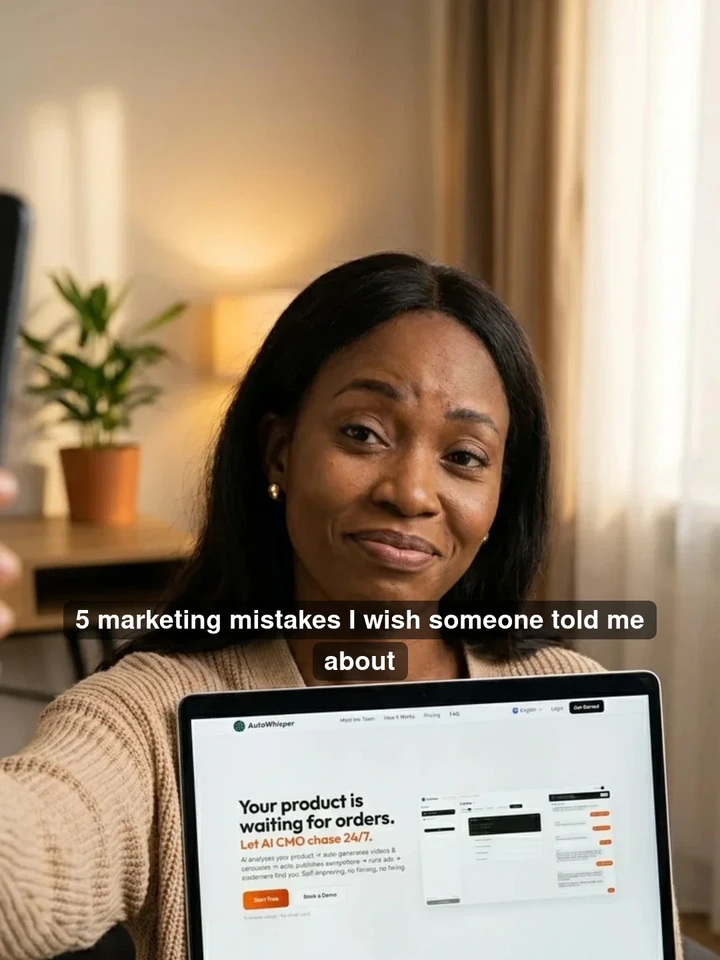

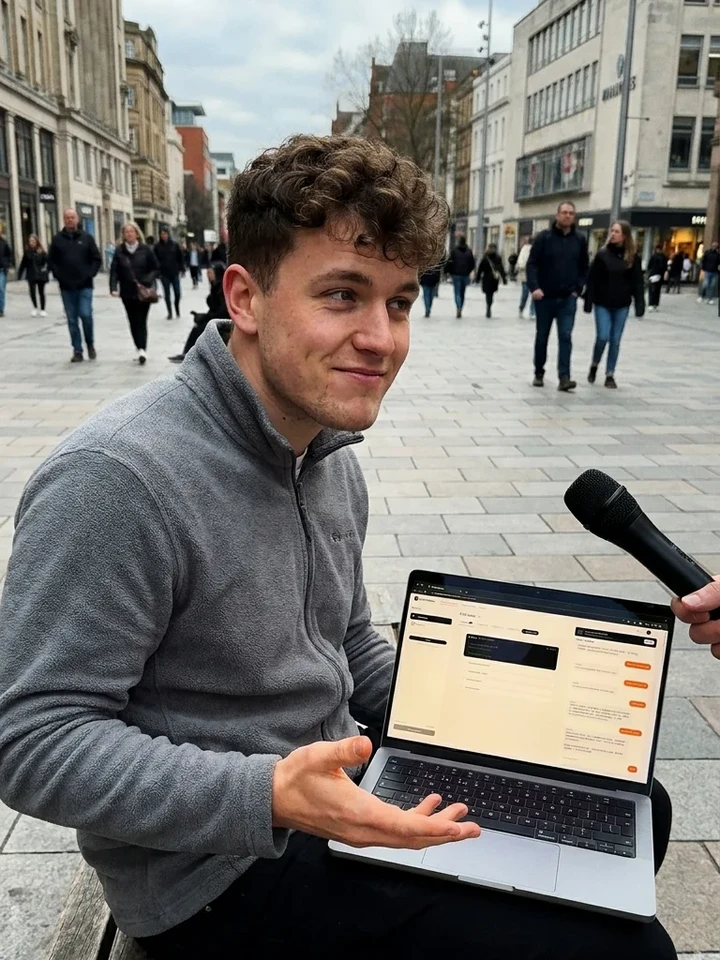
Core principle: frequency beats perfection. Ship it, then let the market tell you what works. These same assets get reused later in move ③ — creative that’s already winning organically makes cheaper, more reliable ad creative than starting from zero.
③ Publish everywhere + track signals
Approved content auto-publishes to your connected platforms, and every link carries UTM tracking automatically. Spend 30 minutes every Friday reviewing the data (see Signal Tracking) — the question we’re tracking isn’t who clicked Like, it’s which content brought real users: sign-ups, WeChat adds, link clicks.
④ Double down on what works
| Signal rank | Action |
|---|---|
| Top 20% | Generate 2–3 variations next week around the same angle — double down |
| Middle 60% | Keep the normal pace |
| Bottom 20% | Pause, try a new angle |
Then loop back to step ①, repeating every week. The full weekly schedule lives in Execution Rhythm.
Move ③: turning the flywheel’s trust into orders
The conversion end splits by your business (same content and trust, different closing move):
- DTC (toC, chasing orders) → take the winning creative from the flywheel into paid ads (make the ad from a product photo, UGC without hiring creators) → landing page → purchase. This is the default path this page covers, and the one most physical-goods sellers are on.
- Overseas B2B (chasing inquiries) → move three isn’t ads, it’s cold email: mine content engagement for prospects → inquiry form → tiered follow-up → close. The full process is in Outbound Guide (a side-branch playbook for selling software/B2B — not this page’s main thread).
Both paths share the same content engine — you don’t produce extra content for either one.
AutoWhisper’s self-improvement mechanism
This is the most powerful part of the whole system — it gets smarter on its own.
- Preference learning: Every time you approve a piece of content, Analyst notes what style you like. Every reject, it notes what you don’t want. After a few weeks, it knows your brand voice better than you do.
- Automatic prompt refinement: Analyst converts learned preferences into a BrandPlaybook (brand style guide), which Writer Agent references every time it generates content.
- Strategy iteration: Analyst generates a weekly StrategyBrief, telling Planner which angle performed best last week and which got zero engagement, so next week’s plan adjusts accordingly.
- Brand evolution: As your brand grows, Analyst tracks shifts in your positioning, voice, and target customer, and periodically updates the BrandPlaybook.
Simply put: the longer you use it, the better it understands you. Week 1 you have a smart CMO. Week 12 you have a CMO who knows every nuance of your brand.
If you take away only one thing
The order can’t be skipped. Get found and get trusted first, let content make you recognizable second, and only then spend money on ads. Skip an earlier move and every dollar spent on a later one buys less.
Open AutoWhisper and create your first product — the CMO starts your first content plan automatically. In 15 minutes you’ll have this week’s content plan.
Add my product — real name, one-line description in my own words, and a real product imageNext step: Product Positioning Guide — Before letting AI mass-produce content for you, spend 15 minutes getting your product positioning clear.